
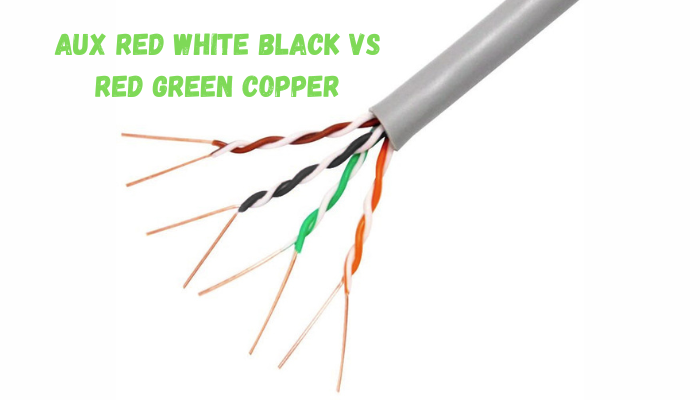

When you’re setting up an audio system, one of the first decisions you’ll face involves selecting the right auxiliary cables. These seemingly simple connectors play a crucial role in transmitting audio signals from one device to another, aux red white black vs red green copper, a turntable to an amplifier, or a mixer to powered monitors.
The confusion around aux cable colors often stems from the fact that different industries and applications use varying color standards. What works perfectly for home audio might not be suitable for professional studio environments, and vice versa. Understanding these distinctions helps you avoid purchasing the wrong cables, which can lead to poor audio quality, signal loss, or incompatibility issues with your equipment.
Auxiliary cables are fundamentally about signal transmission. They carry analog audio information from a source device to a destination device. The colors on these cables aren’t arbitrary choices by manufacturers. Instead, they represent standardized conventions that help technicians, audio engineers, and everyday users quickly identify what type of signal is being transmitted and where it should be connected.
The Red, White, and Black Configuration
The red, white, and black color scheme represents one of the most traditional and widely recognized auxiliary cable setups in consumer audio. This configuration typically appears in RCA connection systems, which have been industry standards for decades. The red conductor traditionally carries the right channel audio signal, the white conductor handles the left channel audio signal, and the black or shield serves as the ground reference.
One significant advantage of the red, white, and black setup is its universal compatibility with older equipment. If you have vintage audio gear from the 1980s or 1990s, odds are excellent that it uses this color standard. This backward compatibility makes it valuable for anyone maintaining older audio systems or working with mixed-era equipment in a single setup.
However, this configuration does have limitations. The red, white, and black cables are primarily designed for short to moderate distances. They work well within a home entertainment center or a small studio space. For longer cable runs or professional installations where signal integrity is paramount, other configurations might prove more effective.
Exploring the Red, Green, and Copper Cable System
The red, green, and copper configuration represents a more specialized approach to auxiliary cable design, often found in professional audio environments and sophisticated home theater setups. This color scheme indicates a different approach to signal routing and impedance management compared to the red, white, and black standard.
In this system, red typically still represents the right channel, maintaining consistency with broader industry conventions. Green, however, introduces a different signal type or carries the left channel in some professional applications. The copper conductor serves multiple purposes, functioning as both a shield and a ground return path, which provides enhanced protection against electromagnetic interference.
Professional audio engineers often prefer the red, green, and copper setup because of its improved shielding characteristics and the clearer signal pathway it provides. When you’re working with expensive equipment in a critical listening environment, the slightly higher cost of these cables becomes worthwhile when it ensures optimal audio fidelity. The enhanced shielding prevents buzz, hum, and other artifacts that can degrade the listening experience.
Color Standards Across Different Industries
Understanding why multiple color standards exist requires looking at how different industries developed their own conventions. The audio industry didn’t adopt a single universal standard early on, so various manufacturers and professional organizations created their own systems based on their specific needs.
Professional audio, meanwhile, evolved with different priorities. Sound engineers and studio technicians needed more sophisticated equipment that could handle multiple signal types and longer cable runs. This environment gave rise to more complex color schemes that could convey additional information through color selection. The red, green, and copper system reflects these more demanding requirements.
International standards organizations have attempted to create universal color coding systems, but adoption remains inconsistent. This reality means that experienced audio professionals need to understand multiple systems and stay flexible when encountering equipment from different manufacturers or countries.
Practical Differences in Signal Quality and Performance
When comparing the red, white, and black configuration to the red, green, and copper system, one of the most significant practical differences involves signal quality over distance. The red, white, and black cables function adequately for short runs, typically up to twenty or thirty feet without noticeable degradation. However, if your cable needs to travel farther, signal loss becomes a real concern.
The frequency response characteristics also vary between these configurations. Higher-quality cables with better shielding can transmit a wider frequency range with greater accuracy. For applications involving high-resolution audio or professional music production, this distinction genuinely matters. Consumer-level applications might not reveal the differences, but they exist nonetheless.
Choosing Between These Cable Configurations
Selecting the appropriate auxiliary cable configuration depends on several factors specific to your situation. Start by considering the distance the cable needs to span. If you’re connecting equipment within the same room or immediate area, the red, white, and black configuration works perfectly well and costs less. The simpler construction meets all your needs without unnecessary expense.
Budget considerations play a role as well, but you should avoid compromising signal quality in critical applications just to save money. For a living room entertainment system used casually, the savings from choosing red, white, and black cables make sense. For a business audio installation or a serious hobbyist’s recording studio, investing in the better cables is the prudent choice.
Installation Tips and Common Mistakes
Proper installation of auxiliary cables ensures you get the best performance from whichever configuration you choose. Many people make simple mistakes that undermine the cable quality they’ve selected. Taking a few precautions prevents these avoidable problems.
Avoid running long cable runs where they might be stepped on, crushed, or bent at sharp angles. These physical stresses damage the internal conductors and shielding, reducing signal quality and potentially causing complete connection failure. Use cable clips and conduit to protect cables in high-traffic areas or installations where physical protection is necessary.
Label your cables clearly, especially when you have multiple auxiliary cables in a system. This practice prevents mistakes during future maintenance or upgrades and makes troubleshooting much easier if problems arise.
Making Your Final Decision
The choice between aux red white black vs red green copper ultimately comes down to matching the cable quality to your specific application and requirements. Neither option is universally superior. Rather, each serves different purposes and different budgets effectively.
For most home audio enthusiasts and casual users, the red, white, and black configuration provides excellent value and performance. These cables do their job well, they’re inexpensive, and they’re universally available. Unless you have specific reasons to upgrade, this option represents the practical choice.
For professionals, perfectionist hobbyists, and anyone whose livelihood depends on audio quality, the red, green, and copper system represents a worthwhile investment. The improved shielding, better signal transmission, and superior construction quality deliver real benefits that justify the higher cost. When audio quality matters deeply, these cables pay dividends through consistently excellent performance.
Read Also: Aux Red White Black vs Red Green Copper