

Edgenuity earth science answers is a comprehensive online learning platform designed to help students understand the fundamental principles of our planet. Whether you’re taking this course for the first time or revisiting concepts, navigating the material effectively requires strategy and dedication.
The course covers essential topics ranging from weather patterns and plate tectonics to mineral composition and environmental science. Many students find themselves searching for answers not necessarily because they want shortcuts, but because they genuinely want to understand the material better. This is where developing strong study habits becomes invaluable.
The reality is that Edgenuity Earth Science presents challenging material. Students juggle multiple responsibilities, and sometimes the pacing of online courses doesn’t match their personal learning speed. Understanding this struggle is the first step toward developing a sustainable approach to your coursework.
Breaking Down Key Earth Science Concepts
Earth Science covers interconnected systems that shape our world. To truly master this subject, you need to understand how these pieces fit together rather than memorizing isolated facts.
Geology and Earth’s Structure
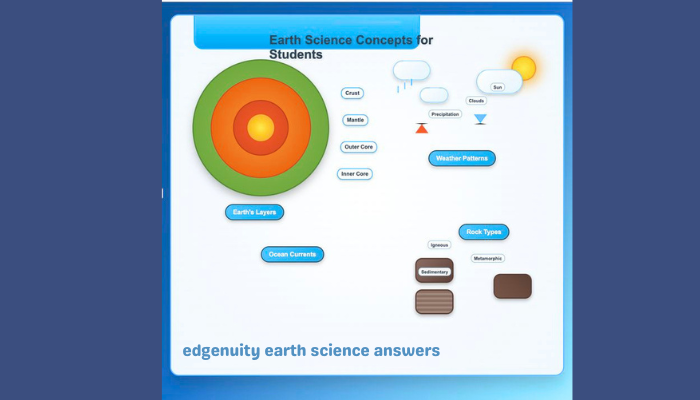
The Earth’s layers work together to create the dynamic planet we inhabit. When learning about the crust, mantle, and core, visualize how heat flows from the interior outward. This visualization helps you understand why earthquakes occur and how mountains form. Study the rock cycle thoroughly because it appears repeatedly throughout the course in different contexts.
Atmospheric Science and Weather
The atmosphere operates in predictable patterns. Understanding air pressure, humidity, and temperature relationships opens doors to comprehending weather systems. Rather than memorizing cloud types, learn the conditions that create each one. This conceptual approach makes the information stick longer than rote memorization ever could.
Water Systems and Oceanography
Water cycles through Earth’s systems constantly. From evaporation to precipitation to groundwater flow, these processes interconnect. Ocean currents, tides, and salinity levels all follow physical principles. Once you understand the underlying physics, explaining specific phenomena becomes much easier.
Developing an Effective Study Strategy
Successful completion of Edgenuity Earth Science requires more than clicking through videos. You need an intentional study approach that builds understanding progressively.
Create a dedicated study space free from distractions. Set consistent times for coursework so your brain anticipates learning during these periods. Break larger topics into smaller study sessions rather than cramming everything into marathon sessions. Your brain retains information better when you space out learning over time.
Create visual aids like concept maps and diagrams. Earth Science is inherently visual. Hand-drawing diagrams of the water cycle, rock cycle, or plate boundaries engages different parts of your brain and creates stronger memories than simply reading text.
Utilizing Available Resources Effectively
Edgenuity provides numerous built-in resources that many students overlook. Your course platform includes video lessons designed by experienced educators. Watch these videos actively by pausing frequently to answer questions or make predictions about what comes next.
Your course materials often include laboratory simulations. These virtual labs allow you to experiment with concepts in safe environments. Treat these simulations seriously rather than rushing through them. The hands-on experience builds intuition that passive reading cannot develop.
Textbook chapters often provide additional explanations of concepts covered in videos. Reading the text after watching videos reinforces material through multiple learning pathways. Some students find text explanations clearer than video presentations, so use all available formats.
Mastering Practice Assessments and Quizzes
Practice assessments serve a critical function beyond generating grades. They reveal what you actually understand versus what you think you understand. Approach practice quizzes with intention.
Review your practice quiz results carefully. For each incorrect answer, trace through your thinking to identify where understanding broke down. Did you misread the question? Did you understand the concept but misapply it? Did you lack foundational knowledge? Different errors require different solutions.
Don’t study questions you answer correctly. Focus energy on content you struggle with. This strategic studying maximizes the value of your effort.
Connecting Earth Science to Real-World Applications
Earth Science becomes more meaningful when you connect concepts to the real world. Notice weather patterns in your daily life. Watch documentaries about volcanoes, earthquakes, or climate change. These connections transform abstract concepts into tangible phenomena you observe.
Read current news articles about environmental issues, natural disasters, or climate science. Edgenuity Earth Science provides tools for understanding these events. Applying your knowledge to real situations deepens comprehension significantly.
Visit local geological sites if possible. Standing on actual geological formations creates memories that textbooks cannot match. Even examining rocks and soil in your neighborhood reinforces concepts about minerals and rock types.
Preparing for Examinations and Assessments
Final examinations require different preparation than routine quizzes. Several weeks before your exam, review your practice quiz mistakes. Create a personalized study list of challenging topics.
Form study groups with classmates if possible. Explaining concepts to peers reveals gaps in your own understanding. Hearing how others explain Earth Science processes provides alternative perspectives that enhance comprehension.
The night before your exam, review your study guide lightly rather than attempting to learn new material. Your brain needs rest to function optimally. Trust the preparation you have already completed.
Moving Beyond Seeking Answers to Understanding
The temptation to search for quick answers online stems from feeling overwhelmed or confused. Recognize this as a signal that you need different study approaches rather than shortcuts.
When you encounter confusing material, pause and break it into smaller pieces. Email your instructor or visit office hours. Most educators genuinely want to help students understand. Your specific confusion often points to how material could be explained differently.
Remember that struggle is part of learning. Moments when concepts feel confusing are actually when your brain is building new neural connections. This discomfort precedes breakthrough understanding.
Conclusion
Edgenuity earth science answers answers matter, but understanding the concepts matters infinitely more. The strategies discussed here focus on building genuine comprehension that serves you long after you complete the course. You gain knowledge applicable to environmental discussions, career decisions, and daily observations about the natural world around you. Commit to deep learning rather than surface-level answers, and you’ll find that both your grades and your confidence improve significantly.
Read Also: Edgenuity Earth Science Answers: Complete Guide to Success